Palindromic Dates: How Calendar Palindromes Work
Learn how palindromic dates work across US, international, and ISO formats, with verified examples, 21st-century counts, 2026 rules, and upcoming dates.
Table of Contents ▼
- Date Rule in Brief
- Why Palindromic Dates Depend on Format
- How to Check a Palindrome Date Correctly
- Verified Examples in the Main Date Formats
- How the Reversed Year Predicts the Month and Day
- How Many Occur in the 21st Century?
- What Is the Next Palindrome Date After 2026?
- Why Palindrome Dates in 2026 Produce Conflicting Lists
- Birthdays, Weddings, and Claims of Luck
- Common Errors When Building a Palindrome Dates List
- Frequently Asked Questions
- What is a palindromic date?
- Are palindrome dates rare?
- What was special about February 2, 2020?
- Does 2026 have palindrome dates?
- How can I calculate a palindrome date from a year?
- Do slashes and hyphens count?
- Are palindromic wedding dates lucky?
- A Date Pattern Needs a Rule
Palindromic dates create a mirrored string when their digits are read from either end. The idea sounds simple, but a date does not have one universal numeric form. October 2, 2001 becomes 10/02/2001 in the United States, while the same digits can represent February 10 elsewhere. Leading zeros, short years, and regional order can all change whether a day qualifies.
That is why accurate lists must state their rules. This guide mainly uses fixed eight-digit forms with a four-digit year: MMDDYYYY, DDMMYYYY, and YYYYMMDD. Separators are removed before the digits are checked. You will learn how to test a date, predict matches from the year, compare the major formats, and understand the unusual 2026 claims found online. The guide also identifies the next strict palindrome days after 2026 and explains why a memorable calendar pattern does not carry scientific or predictive meaning.
Date Rule in Brief
A palindromic date is a calendar date whose digits remain identical when reversed in a stated format. For example, November 2, 2011 becomes 11022011 in MMDDYYYY form. Date order, leading zeros, and year length must stay consistent because changing any of them can create or remove the palindrome.
Why Palindromic Dates Depend on Format
The calendar day alone is not enough to answer the question. Its written representation is what gets reversed. Three common forms are:
| Convention | Pattern | Common Use |
|---|---|---|
| Month-day-year | MM/DD/YYYY | United States |
| Day-month-year | DD/MM/YYYY | Many countries worldwide |
| Year-month-day | YYYY-MM-DD | ISO-style numeric notation |
Remove the separators, but keep every required zero. October 2, 2001 is 10022001 in US notation. Reversing those eight digits produces 10022001, so it qualifies. In day-month-year notation, however, the same day is 02102001, which reverses to 10020120 and fails.
The string 10022001 can also describe February 10, 2001 under DMY rules. This does not mean the two calendar dates are the same. It means one symmetrical digit string receives different interpretations under two conventions.
ISO-style YYYYMMDD produces the same set of actual matching days as strict MMDDYYYY, although the strings look different. October 2, 2001 is 20011002 in YMD form, which is also symmetrical.
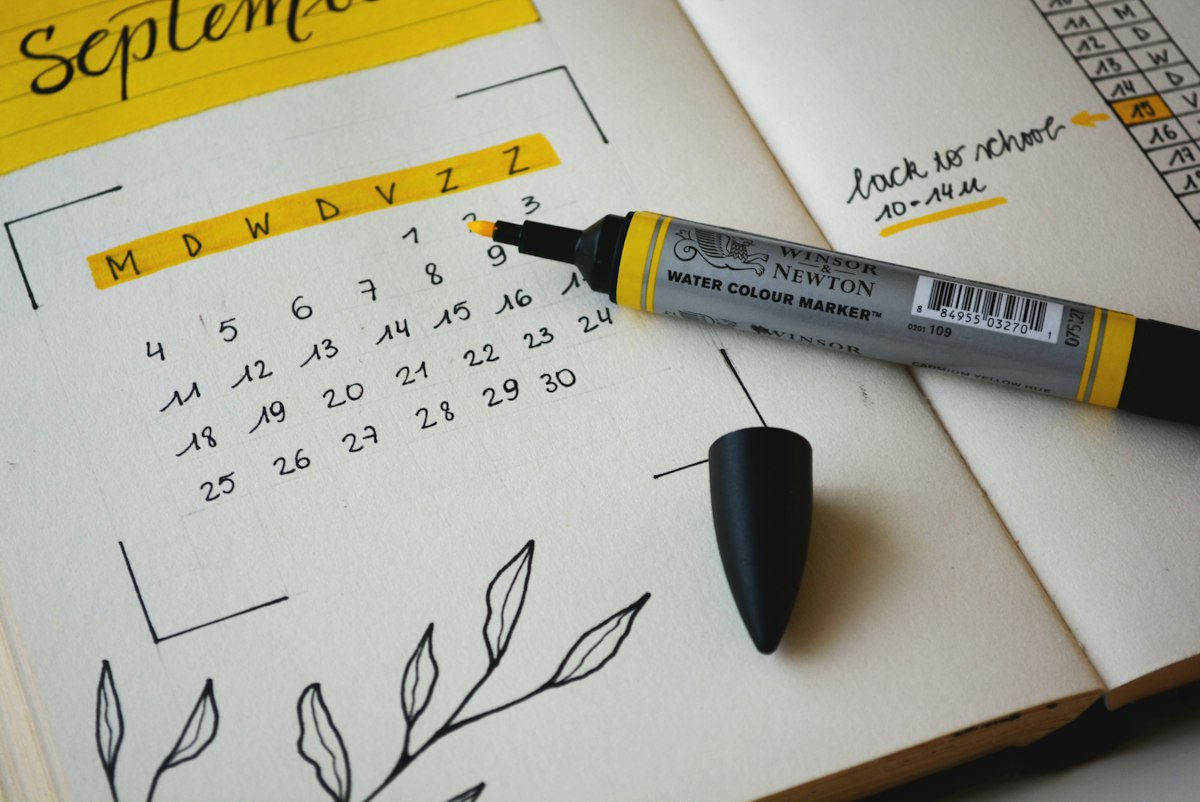
Figure 1: Palindromic dates depend fundamentally on regional conventions and digit padding.
How to Check a Palindrome Date Correctly
Use one consistent process instead of judging the printed date by sight:
- Choose the convention. Decide on MDY, DMY, or YMD.
- Choose the year length. A four-digit year and a two-digit year are different tests.
- Set the padding rule. Under fixed-width rules, January is
01, not1, and the second day is02, not2. - Remove separators. Ignore slashes, periods, and hyphens.
- Reverse the full digit string. Compare it with the original.
- Validate the date. A symmetrical string still fails if it creates month 19, day 42, or an invalid February 29.
Take February 21, 2012 in DD/MM/YYYY format:
21/02/2012 → 21022012 → 21022012.
It passes. In MM/DD/YYYY form, the same day becomes 02212012, whose reverse is 21021220, so it does not pass.
This method is also how a palindrome date calculator works: format the date, remove non-digit characters, reverse the result, and compare it with the starting string.
Verified Examples in the Main Date Formats
The table shows why every example needs a format label:
| Calendar Date | Format Tested | Compact Digits | Result |
|---|---|---|---|
| October 2, 2001 | MMDDYYYY | 10022001 | Palindrome |
| February 20, 2002 | DDMMYYYY | 20022002 | Palindrome |
| November 2, 2011 | MMDDYYYY | 11022011 | Palindrome |
| February 21, 2012 | DDMMYYYY | 21022012 | Palindrome |
| February 2, 2020 | MMDDYYYY | 02022020 | Palindrome |
| February 2, 2020 | YYYYMMDD | 20200202 | Palindrome |
| December 2, 2021 | MMDDYYYY | 12022021 | Palindrome |
| February 22, 2022 | DDMMYYYY | 22022022 | Palindrome |
February 2, 2020 is often called a universal palindrome day. The same real date works in the main MDY and DMY conventions because its month and day are both 02. It also works as 20200202 in year-first notation. Most palindrome days do not cross regional formats this neatly.

Figure 2: Four-digit years determine the corresponding month and day required for eight-digit symmetry.
How the Reversed Year Predicts the Month and Day
With eight fixed digits, the year determines the first four digits of the date. Consider a year written as YYYY. Reverse those four digits to get a possible MMDD or DDMM block.
For 2030:
2030 → reversed → 0302
- Under MMDDYYYY,
03is the month and02is the day, producing March 2, 2030:03022030. - Under DDMMYYYY, the same
0302block means day03and month02, producing February 3, 2030:03022030.
This shortcut generates a candidate, but calendar validation remains necessary. Reversing 2026 gives 6202. That cannot be read as MMDD because month 62 is invalid. It also cannot be DDMM because day 62 is invalid. Therefore, 2026 has no strict eight-digit match in either convention.
For years from 2001 through 2099, the reversed year always ends with 02. In DMY notation, that makes the month February, provided the first two digits form a valid day. In MDY notation, the day becomes 02, provided the first two digits form a valid month.
How Many Occur in the 21st Century?
Using the standard century span from 2001 through 2100, fixed two-digit month and day fields, and a four-digit year gives these totals:
| Format | Valid Dates | Main Reason |
|---|---|---|
| MMDDYYYY | 12 | The reversed year must begin with a month from 01 to 12 |
| YYYYMMDD | 12 | It produces the same actual dates as MMDDYYYY |
| DDMMYYYY | 29 | The reversed year must begin with a valid February day from 01 to 29 |
The 12 US-format dates are October 2, 2001; January 2, 2010; November 2, 2011; February 2, 2020; December 2, 2021; and the second day of March through September in 2030, 2040, 2050, 2060, 2070, 2080, and 2090.
The DMY list is longer because February can supply up to 29 valid day numbers, while the MDY test allows only 12 month numbers. Examples include February 10, 2001; February 20, 2002; February 1, 2010; February 11, 2011; February 21, 2012; and February 22, 2022. The pattern later produces groups in 2030–2032, 2040–2042, and similar decades.
The final DMY match of the century is February 29, 2092, written 29022092. It is valid because 2092 is divisible by four and is not a century year, making it a leap year. The final MDY match is September 2, 2090, written 09022090.
What Is the Next Palindrome Date After 2026?
After September 2026, the next fixed eight-digit pattern is 03022030, but its calendar meaning depends on the selected order:
- In MM/DD/YYYY, it is March 2, 2030.
- In DD/MM/YYYY, it is February 3, 2030.
- In YYYY-MM-DD, the next matching date is 2030-03-02, written compactly as
20300302.
This is a useful example of why “the next palindrome date” is incomplete without a region or format. MDY and DMY users see the same eight mirrored digits in 2030, yet they celebrate them almost a month apart.
Why Palindrome Dates in 2026 Produce Conflicting Lists
Current-year searches often use flexible notation rather than strict eight-digit formatting. June 20, 2026 becomes 6202026 if the zero before June is omitted. That seven-digit string reads identically in reverse, so it is a valid result under an unpadded M/DD/YYYY-style rule.
Using a two-digit year changes the results again. In unpadded M/D/YY notation:
- June 2, 2026 becomes
6226. - June 20, 2026 becomes
62026. - June 21 through June 29 become
62126through62926.
Each string is symmetrical. However, none belongs in a list defined as MMDDYYYY, DDMMYYYY, or YYYYMMDD. A claim such as “2026 has ten consecutive palindrome days” can be correct under M/D/YY rules while being false under a fixed eight-digit rule. The apparent disagreement comes from formatting, not faulty reversal.

Figure 3: Palindromic wedding and anniversary dates offer memorable numeric harmony on invitations.
Birthdays, Weddings, and Claims of Luck
A palindrome birthday or wedding date can be appealing because the pattern is easy to remember and looks attractive on invitations, keepsakes, or social posts. Couples may also use a short display that highlights symmetry, but the chosen form should match the way guests normally read dates to prevent ambiguity.
The pattern has no demonstrated effect on luck, personality, relationships, or future events. Numerology may assign symbolic interpretations to repeated or mirrored digits, but those interpretations are belief-based rather than calendar mathematics. A date palindrome is special in a visual and recreational sense, not a scientific one.
For planning an event, practical matters still come first: availability, travel, cost, weather, and the legal date shown on documents. The palindrome can make a suitable date more memorable, but it should not replace those decisions.
Common Errors When Building a Palindrome Dates List
- Mixing formats: Do not place MDY and DMY results in one unlabeled list.
- Changing padding:
02and2create different strings. Pick one rule and keep it. - Switching year length: A result using
26does not prove the four-digit year2026also works. - Accepting impossible dates: Digit symmetry cannot make February 30 valid.
- Counting the same digits as the same day:
03022030represents March 2 in MDY and February 3 in DMY. - Including separators in one test but not another: The standard practice is to remove them consistently.
- Calling every repeated-number date a palindrome: A date may look patterned without matching its complete reversal.
Frequently Asked Questions
What is a palindromic date?
It is a calendar date whose numeric representation reads the same forward and backward after separators are removed. The format must be declared first. November 2, 2011 is 11022011 in MMDDYYYY and qualifies, but its DMY representation does not.
Are palindrome dates rare?
They are uncommon under strict eight-digit rules, but the frequency depends on the format and time range. The 21st century contains 12 matching MDY dates and 29 matching DMY dates. Short years and omitted leading zeros create additional results, so “rare” should always be tied to stated rules.
What was special about February 2, 2020?
It worked as the same calendar day across the major regional orders. Removing separators gives 02022020 in both MDY and DMY, while ISO-style YMD produces 20200202. All three strings are palindromes, which is unusual because most mirrored date strings refer to different days across formats.
Does 2026 have palindrome dates?
Yes under some shortened or unpadded styles, but not under strict MMDDYYYY or DDMMYYYY. June 20 becomes 6202026 without a leading month zero. In M/D/YY form, June 20 through June 29 create a run of matching strings. The answer therefore depends on the notation.
How can I calculate a palindrome date from a year?
Reverse the four year digits to create a candidate month-day or day-month block. For 2030, the reverse is 0302, giving March 2 in MDY or February 3 in DMY. Then confirm that the proposed month and day form a real calendar date.
Do slashes and hyphens count?
They are normally removed before the comparison. A checker tests the ordered digits rather than the separator style. You should still preserve leading zeros when using a fixed-width format, since removing a zero changes the digit string and may change the result.
Are palindromic wedding dates lucky?
There is no scientific evidence that a mirrored date affects a marriage or predicts good fortune. Its value is practical and personal: it looks distinctive and may be easier to remember. Couples can enjoy the pattern while choosing their date based on real scheduling and budget needs.
A Date Pattern Needs a Rule
Palindromic dates are easy to test once the notation is fixed. Choose the regional order, decide whether the year has two or four digits, keep the padding consistent, remove separators, and compare the complete string with its reverse. Then check that the result exists on the calendar.
That method explains both the tidy 21st-century counts and the conflicting 2026 lists. It also prevents a mirrored string from being mistaken for one universal calendar day. The symmetry is real, but its meaning always begins with the format.
Check Your Own Words & Numbers
Test any word, sentence, date, or number with our interactive palindrome tool. Automatically normalizes punctuation, spaces, and casing.
Related Articles
Explore more in-depth guides and analysis.

Palindrome Program in Java: How to Check a Palindrome With Examples
Learn how to build a palindrome program in Java for numbers and strings using loops, StringBuilder, two pointers, and recursion.

Palindrome Python Guide: Check Strings and Numbers
Learn palindrome Python methods for strings and numbers using slicing, loops, functions, recursion, text normalization, and practical examples for beginners.

What Is a Palindrome? Meaning, Types, and Examples
What is a palindrome? Learn its meaning, pronunciation, types, and clear examples using words, phrases, names, numbers, dates, and times in simple language.